- Products
- Solutions
Real-Time Analytics
Sub-second dashboards and data products on petabytes of data at any concurrency
Data Warehousing
Sub-second analytics on open lakehouse formats with no vendor lock-in
Observability in the AI Era
The most cost-effective alternative to Elasticsearch observability
Context Engineering
Hybrid search and fresh context for RAG, agents, and LLMs
- Docs
- Resources
- Pricing
- Contact us






Comparisons
VeloDB vs Snowflake
VeloDB is designed for real-time data analytics with strong scalability. Snowflake is a cloud-based data warehouse and analytics platform. When it comes to real-time analytics, VeloDB shows higher concurrency, faster queries at a fraction of the cost.
Real-Time Data Latency
Faster Queries
Higher Concurrency
Cost Efficiency
Why Choose VeloDB
- Deployment
Supports three deployment options:
 Cloud-native SaaS service on AWS, Azure, and GCPCloud-native BYOC service on AWS, Azure, and GCPOn-premise deployment with enterprise-grade reliability
 - Real-Time UpdatesHigh-throughput real-time data updates reach millions of records per secondConsume data from sources like Flink, Kafka, and APIs in real-time, with data visibility in seconds
- Data APISupports Arrow Flight for high-speed data reading
- Rich IndexesSkip Index: Minmax Index, BloomFilter IndexPoint Query Index: Prefix Index, Inverted Index
- Materialized ViewSupports synchronous materialize view, real-time data refreshingSupports asynchronous materialized view for multi-table
- Use CasesReal-Time AnalyticsData Warehouse and LakehouseLogging and Observability
- DeploymentSupports only Cloud SaaS
- Real-Time UpdatesNot ideal for frequent data updatesBatch data ingestion
- Data APIOnly supports low-speed data reading via JDBC, ODBC
- Rich IndexesOnly supports skip index (Minmax Index, BloomFilter Index)
- Materialized ViewNo support real-time data refreshingNo support for asynchronous materialized view
- Use CasesSupports data warehouse and lakehouse, yet not ideal for real-time analytics
By making the switch to VeloDB for our real-time analytics platform, we've seen query speeds boost 3-10x faster and costs dropped nearly 50% compared to Snowflake. Plus, VeloDB's strong support for diverse analytical workloads—like complex searches, multi-table joins, and a variety of aggregations—makes it ideal for analytics that need to be both swift and adaptable.

Performance Comparison
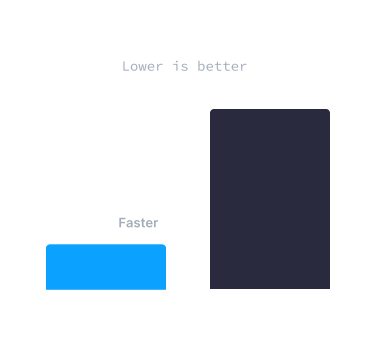
TPC-H SF100 Benchmark
The TPC-H benchmark with a scale factor of 100 (SF100) is a widely used standard for evaluating database performance. It includes a set of complex SQL queries designed to simulate real-world business intelligence workloads.
For comparison of query performance, models with similar costs were selected:
- Snowflake Standard (Gen2),Large, Enterprise
- VeloDB Cloud with 192C configuration
TPC-DS SF1000 Benchmark
The TPC-DS SF1000 Benchmark evaluates data warehouse performance using a 1TB dataset with 6.35 billion records across 24 tables.
It includes 99 complex queries to test joins, aggregations, and subqueries. Based on a snowflake schema, it simulates real-world sales scenarios. The 1TB scale is challenging due to query complexity.
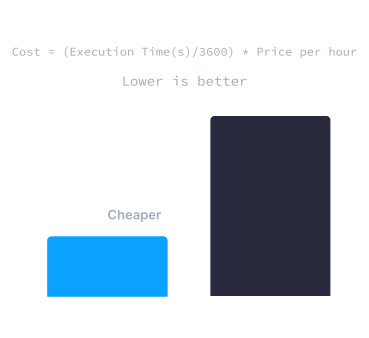
ClickBench
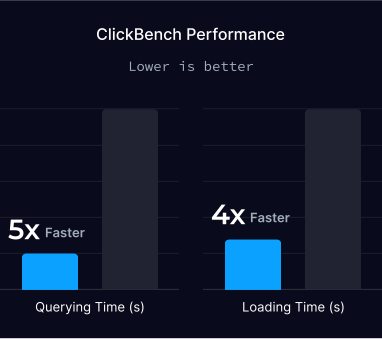
ClickBench is a benchmarking tool to evaluate the performance of analytical databases. It focuses on testing the performance of large, flat tables rather than complex multi-table joins. It uses real-world data from a major web analytics platform, covering typical scenarios such as clickstream analysis and structured logs.
For comparison of query performance, models with similar costs were selected:
- Snowflake Standard (Gen2),Large, Enterprise
- VeloDB Cloud with 192C configuration
More Migration Stories
 User StoriesHow StepFun Built a PB-Scale Agent Observability Platform with Apache DorisStepFun built StepTrace, a PB-scale agent observability platform on Apache Doris.2026/7/8
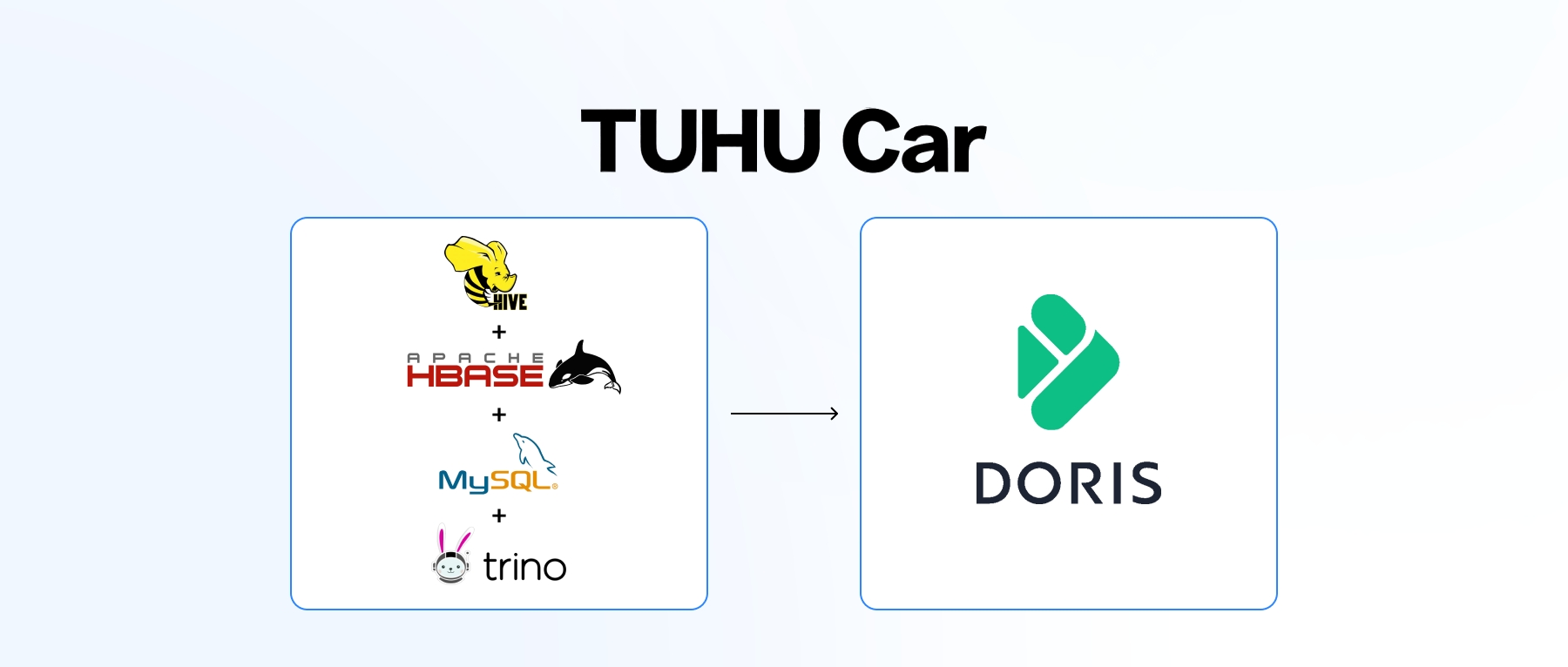 User StoriesFrom Hive, HBase, MySQL, and Trino to Apache Doris: Tuhu Car's Unified OLAP ArchitectureTuhu Car rebuilt its OLAP architecture with Apache Doris after years of running a fragmented tack of Hive, HBase, MySQL, and Trino.2026/7/3
 ProductsDatabricks RT and LTAP are here. How does it fit into OLTP, OLAP, real-time OLAP, and HTAPReal-time database categories now span across OLTP, OLAP, real-time OLAP, HTAP, and Databricks' new LTAP, but each makes different trade-offs across freshness, query latency, concurrency, and updates.2026/7/10

© 2026 VeloDB Inc. All rights reserved. Apache Doris and its logo are trademarks of The Apache Software Foundation